A wild democracy? The figurative representation of the Hungarian Parliament in editorial cartoons
Author: Ágnes Virág
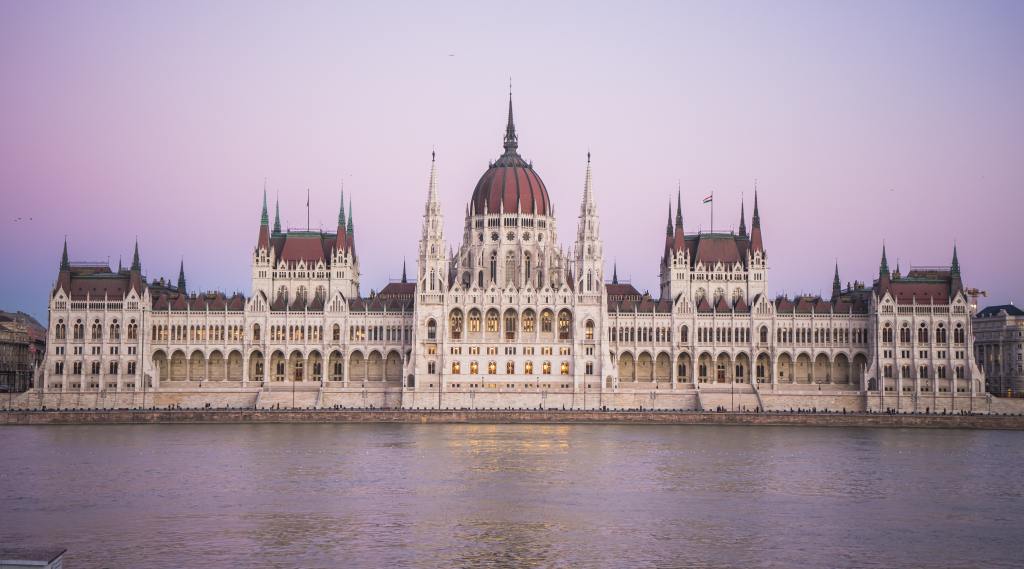
Both public opinion polls and academic research have found that the Parliament is often linked to concepts such as democracy, corruption, power, nationhood, etc. Why is it important to deal with these associations that go beyond the literal meaning of the Parliament understood as a building or an institution? On the one hand, because all of these can influence how we think about politics, its processes and actors, and how we frame our arguments when debating a political issue and what solutions we would propose. On the other hand, such an investigation can also demonstrate the shifting meanings that we associate with a seemingly permanent symbol. Yet how are these meanings – and shifts in meaning – visually represented? This was the aim of the present research, which focused on the visual representation of the Hungarian Parliament in Hungarian editorial cartoons between 1989 and 2019.
Previous research has already shown that editorial cartoons strongly rely on metaphors, especially within the field of politics, as the metaphors help to simplify an issue (for example, by depicting a political debate as a battle). In addition to several variables, the current research examined what visual metaphors were used to interpret the Hungarian Parliament. We found that the majority of the editorial cartoons depicted politics as a physical conflict throughout the whole period under investigation. However, when scrutinized further, the physical conflict metaphor highlighted different aspects, depending on what era the cartoon belonged to. In the period of transition (1989-1998), physical conflict was depicted without real physical contact, and the cartoons focused on the tension between the politicians, the preparation for the fight and the preparation of the weapons (such as knife or sword). In the second period, during consolidation (1999-2006), physical conflict became an ongoing fight typically in the Assembly Hall. It was the third period, the era of crisis and regime change (2007-2019), which was characterized by the most aggressive scenes, such as mutilation or a death sentence. The findings thus demonstrate an increasingly aggressive use of visual figurative language in connection with the Parliament in Hungarian editorial cartoons.
Read more here:
Ágnes Virág (2022). “Wild Democracy”: The figurative conceptualization of the Parliament in Hungarian editorial cartoons (1989 – 2019). PhD dissertation, Doctoral School of Sociology and Communication Science, Corvinus University of Budapest. http://phd.lib.uni-corvinus.hu/1278/
 Corvinus Metaphor Workshop