🇬🇧 Conceptual Metaphors of Postpartum Mood Disorders
Metaphors are powerful tools that shape our comprehension of intricate concepts and experiences. In the realm of mental health, metaphors enable us to grasp the elusive aspects of conditions like postnatal mood disorders. Around the third or fourth day after giving birth, many women experience “baby blues,” which is a temporary feeling of sadness and typically resolves within a few days without medical treatment. Monitoring this phenomenon is crucial, as baby blues can worsen into depression. Society often expects motherhood to be a time of unadulterated joy and fulfilment. However, this idealized perception disregards the reality that not all mothers find the initial period of childcare a seamless journey. By delving into the metaphors used to describe postnatal mood disorders, we can unravel the complexities and struggles that are often concealed behind societal expectations.
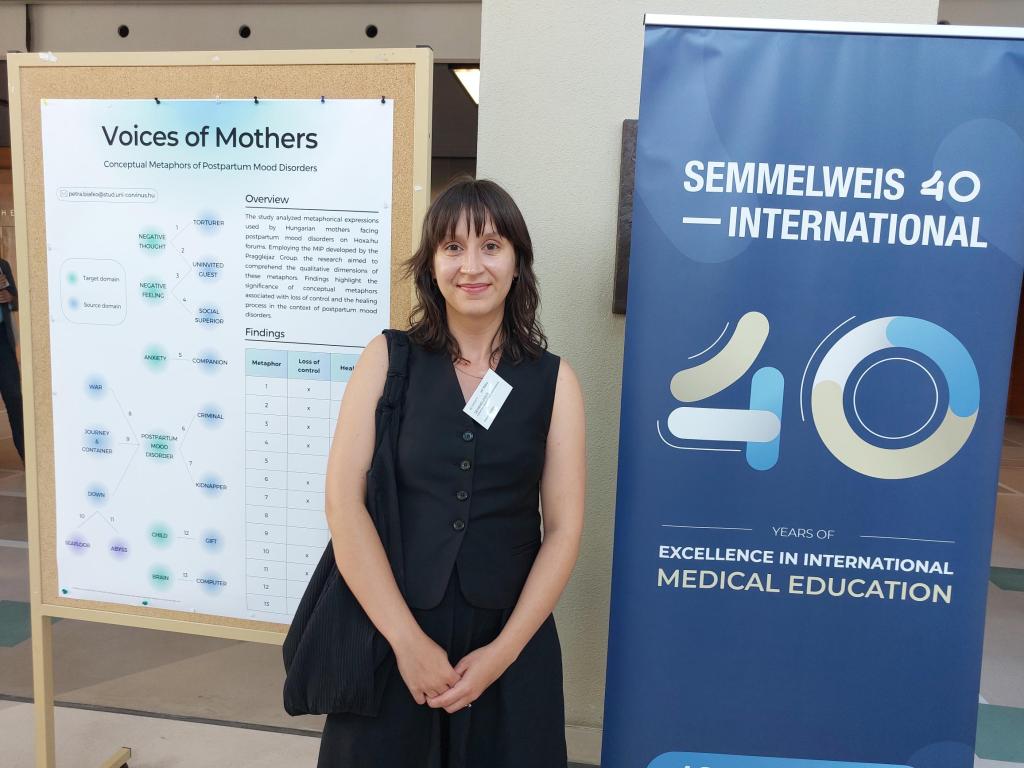
Petra Bialkó, our second-year Master’s student, addressed this issue in her thesis research entitled “Voices of Mothers: Conceptual Metaphors of Postpartum Mood Disorders.” She presented her findings as a poster presenter at the Semmelweis Medical Linguistics Conference on June 2–3, alongside Réka Benczes and Lilla P. Szabó.
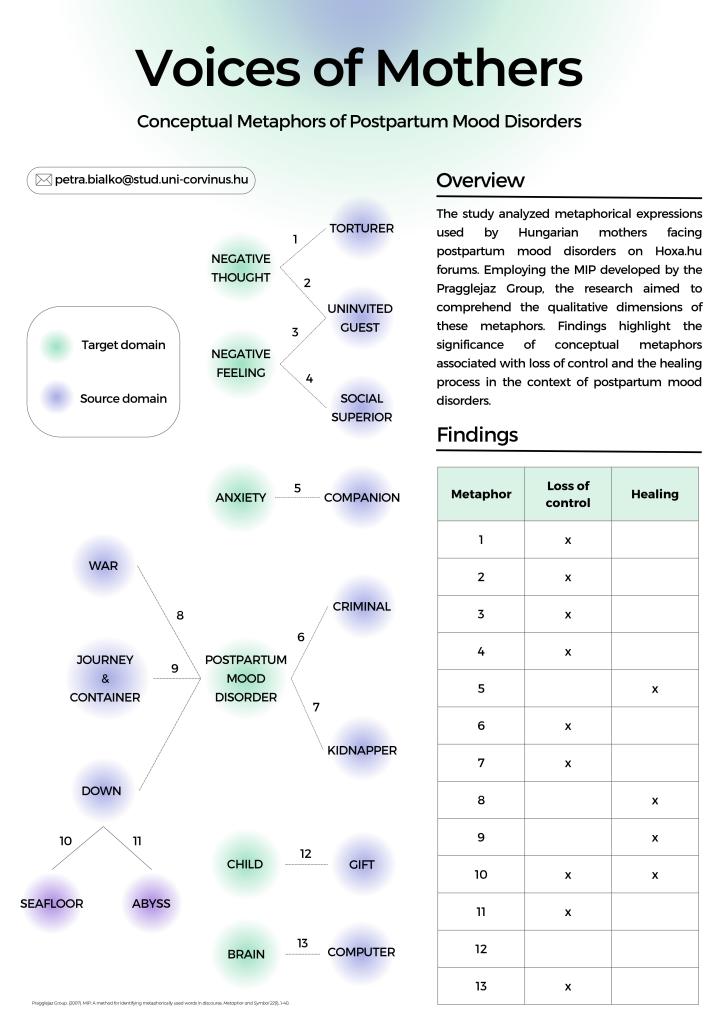
Petra’s study analyzed metaphorical expressions used by Hungarian mothers facing
postpartum mood disorders on Hoxa.hu forums. Her findings highlight the significance of conceptual metaphors associated with the loss of control and the healing process in the context of postpartum mood disorders.
—
🇭🇺
A metaforák hatásos eszközök, amelyek segítik az elvont fogalmak és tapasztalatok megértését. A mentális egészség terén a metaforák lehetővé teszik, hogy megragadjuk az olyan állapotok nehezen megfogható aspektusait, mint a szülés utáni hangulatzavarok. A szülés utáni harmadik vagy negyedik nap körül sok nőnél jelentkezik a „baby blues”, amely egy átmeneti lehangoltság és általában orvosi kezelés nélkül néhány napon belül rendeződik. A jelenség nyomon követése kulcsfontosságú, mivel a baby blues akár depresszióvá is súlyosbodhat. A társadalom gyakran elvárja, hogy az anyaság a felhőtlen öröm és kiteljesedés időszaka legyen. Az idealizált felfogás azonban figyelmen kívül hagyja a valóságot, miszerint nem minden anya számára zökkenőmentes a gyermekgondozás kezdeti időszaka. Ha elmélyedünk a szülés utáni hangulatzavarok leírására használt metaforákban, feltárhatjuk a társadalmi elvárások mögött gyakran megbúvó összetett tényezőket és megpróbáltatásokat.
Bialkó Petra másodéves mesterszakos hallgatónk ezt a kérdést járta körül az „Anyák hangja: A szülés utáni hangulatzavarok fogalmi metaforái” című kutatásában. Eredményeit poszterelőadóként mutatta be a 2023. június 2 és 3 között szervezett Semmelweis Medical Linguistics Conference keretébenBenczes Réka és Szabó Lilla Petronella mellett.
 Corvinus Metaphor Workshop